Fun Phone Games for Long-Distance Couples: 15 Picks 2026
Long distance kills the easiest part of a relationship, which is doing nothing together in the same room. The phone cannot fix that gap. The phone can at least convert the nightly video call from a conversation that runs out at minute twelve into an event with a scoreboard, a stake, and a reason to open the app again on Thursday. Most couples a thousand miles apart average 4.8 hours a week of video time and most of that time dies on talking about the day.
The list below is fifteen phone games that hold up on a video call, ranked by how often a couple opens them twice rather than once. Some are shake reflex. Some are question decks. Some run inside the call window, some over a text thread between calls. One of them is ShakeGasm, because the brand built it for exactly this kind of two-person loop. For in-person picks the sister roundup is couples phone games for date night.
Pick three. Run them in a row on your next call. Anything that flops gets closed before the next round. Anything that lands gets added to the weekly rotation, which is the only metric that matters for a long-distance couple on a 7-day cadence.

Why long-distance couples need games built for the phone screen
Long-distance couples average 4.8 hours a week on video calls and most of that time runs out of material by minute twenty. The call turns into parallel scrolling with the camera on, which is lonelier than scrolling alone. A phone game sitting on the same screen as the call fixes the material problem without asking either side to plan anything. Pick, play, pass the turn, close. Setup cost near zero, laughter density high, replay rate measurable in weekly opens rather than one-off novelty.
The format wins because video adds a channel the phone alone cannot. A reflex game on video shows face, hands, and the exact second someone fumbles. A question deck on video adds eye contact that a text thread strips out. Even a drawing game lands differently when the partner reacts in real time to the hand drawing a bad cat. Each game below is sorted by whether it runs inside a video call, outside the call as a text-thread loop, or in both lanes.
The honesty premium also compounds across distance. Partners ask harder questions when the phone takes the blame, and distance already lowers the social cost of answering out loud. A couple who runs a question deck weekly for two months ends up with more raw data about each other than most co-habiting couples get in a year of overlapping dinner tables.
15 phone games tested on real long-distance couples
Ordered from quick reflex warmup to slow async loop. Most couples warm up with #1 or #2 before switching to a question deck.
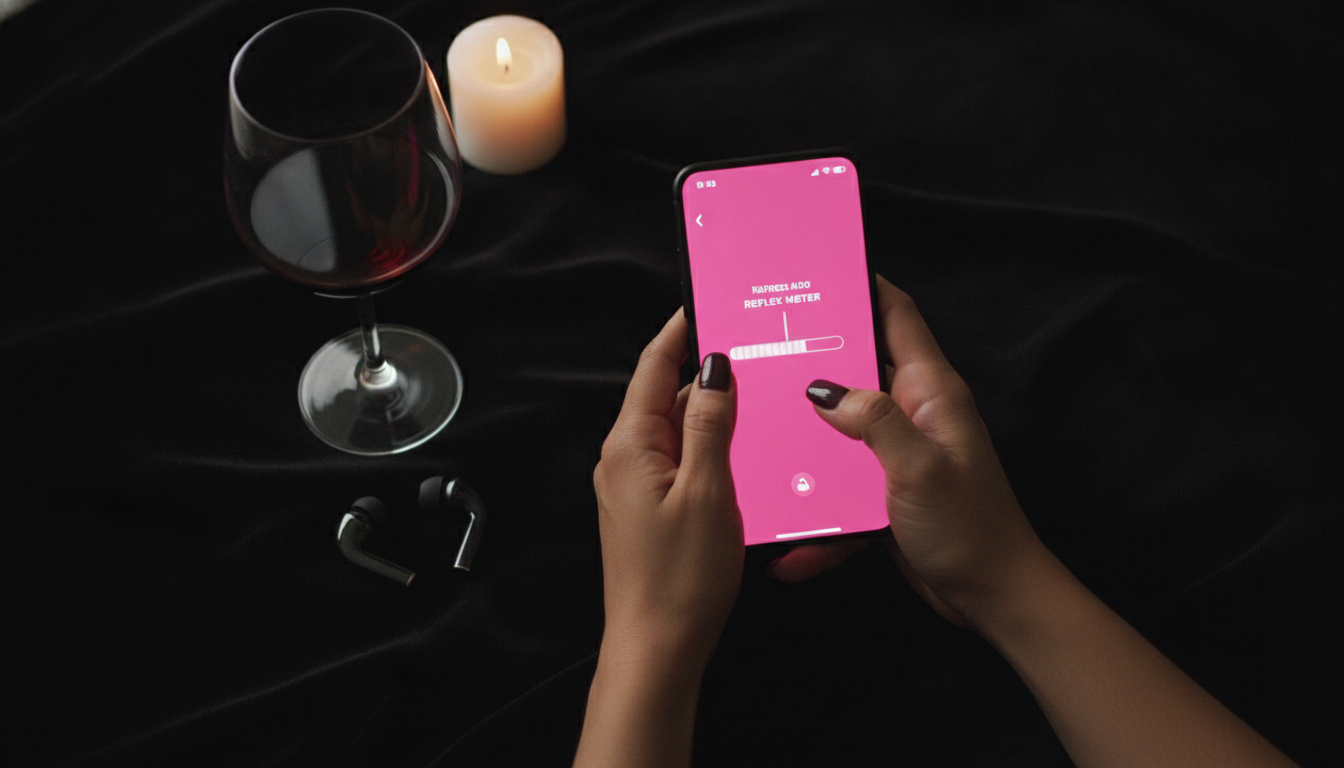
- ShakeGasm. Free, no install, runs in a browser tab beside the video call. Ten seconds of shake per round, loser owes a dare from the shared jar. The current build is pure reflex and that works as the warmup slot on a weekly call. More context on the reflex design lives in why phone reflex games feel so good.
- Gottman Card Decks. Free app from the Gottman Institute, three difficulty tiers of relationship questions. Start on the easiest deck and do not skip. Best for the first 20 minutes of a Sunday call when neither side has a plan.
- WANRS card deck (digital edition). Three-level question deck with physical cards available separately. The paid deck runs about $25 USD, free for the daily online prompt. Pulls deeper material than Gottman after the fourth session.
- Trivia Crack 2 Player. Head to head general knowledge, 10 questions, roughly 4 minutes per match. Scoreboard persists across the week between calls, which is the hidden reason it wins.
- Heads Up (Celebrities or Bands category). One partner holds the phone to their forehead on video, the other yells clues through the call audio. Five minutes flat, laughter density hard to beat.
- Truth or Dare apps (Couples Spicy deck). Pick the deck before you hand the turn. Five-second pass rule. Flirty pressure without writing the prompts yourself.
- Reigns: Her Majesty. Choose-your-own-adventure where each chapter alternates between phones over screen share. Low-effort plot to argue about for 30 minutes per session.
- Two Dots co-op levels. Both thumbs on a synced level. Looks wholesome, becomes competitive around level 40 when neither side wants to be the one who misses the move.
- Among Us two-player private lobby. Four bots plus two humans in a small private game. Weird in theory, works because the bluffing load falls heavier on two humans than on ten.
- Spyfall online lobby. Each partner takes two roles. Different muscle than honesty cards, which is the point after a month of question decks.
- Chess.com rapid 10-minute. The classic standby, earns its spot by being playable in the background of a long call without demanding full attention. Average 10 to 15 minutes per game.
- Words With Friends 2. Async text-thread lane, not video. One or two moves a day between calls. The slow-burn game that keeps the relationship pulse up between Sunday calls.
- Sketchful.io private room. Take turns drawing on your own phone while the other guesses through the call audio. Nobody draws well and nobody minds.
- Rolljak or Kahoot Create (couples trivia). Build a 20-question deck about your own relationship, run it quarterly. Hosting cost is one hour of writing, replay rate is high.
- Marco Polo (video message app). Not a game in the classic sense, functions as a daily turn-based loop of face-to-face video texts. Fills the gap between live calls, which is where most long-distance couples stall.
The video-call setup that stops games from feeling flat
Opening a game cold on a video call almost always flops because the audio layer is wrong. Call audio clips at anything above a laugh, and the game audio fights for the same bandwidth. Five minutes of setup multiplies how much the next 45 minutes land. The checklist is short and the cost is zero.
- Both sides on wired earbuds or AirPods, never speaker. Speaker to speaker creates a 200ms echo loop that destroys reflex games.
- Game on the phone screen, call on a laptop or tablet. Keeps the camera framing stable and lets both partners see each other and the game at the same time.
- Phone brightness one notch above comfortable. The camera sees screen glow, which is half the drama in reflex games.
- One drink poured before the game starts, not refilled mid-round. Pouring breaks the shared tempo.
- Notifications on do-not-disturb for both phones, not silent. Silent-mode banners still cut focus mid-round.
Most couples skip three of those five steps and then wonder why the Thursday call feels off compared to Sunday. The fix costs nothing and the result is roughly 20 extra minutes of laughter per session, which compounds across a month into the difference between a holding pattern and a growing relationship.
Stakes that work when you cannot be in the same room
A phone game without stakes becomes scrolling with the camera on. Distance makes stake design harder because most date-night stakes assume physical proximity: massage, pick the meal, strip one item. The workaround is to pre-fund stakes that cross the postal or payment system. Build the stake menu once, store it in a shared note, draw blind at the end of each session.
Loser orders dinner delivery to the winner's apartment, hard cap at $25 USD, delivered within 48 hours; UberEats and DoorDash both support gifting across cities and most countries. Loser writes a one-paragraph text in the morning about something they noticed in last night's call, which compounds the honesty premium. Loser picks the next shared watch-party movie and books the sync via Teleparty or Scener for the following weekend. Loser mails a physical postcard with one specific line written by the winner; lead time runs 3 to 7 days, which stretches the game across the week. Loser does a dare from the shared jar, built together over one call with ten prompts each side.
The jar is the upgrade most long-distance couples never make and the one that converts a weekly call into a weekly ritual. Prompts compound across a month and the library of 40 private dares holds through any slow week when neither of you has anything to report.
The right long-distance phone game is the one that costs nothing, runs beside the video call, and gets opened a second time next Thursday. Everything else is a fancy timer with earbuds.
The 15-minute weekly loop
The full fifteen-pick list is for a slow Sunday with nowhere to be on either side. For a quick Tuesday after dinner the loop runs 15 minutes total and locks in better than most hour-long calls. Run this in order:
- Three questions from the Gottman Card Decks app, easiest deck, 5 minutes.
- One round of ShakeGasm, three shakes each, loser owes one dare from the shared jar, 4 minutes.
- One round of Truth or Dare on the Couples Spicy deck, loser picks the next weekend watch-party, 6 minutes.
Fifteen minutes, two laughs, one stake that lands 48 hours later when a delivery arrives at the loser's door. The longer the feature list of most long-distance couples apps the worse they perform in practice, and the simpler the loop the more times it gets opened in a month. Build the jar, pick three picks, run the loop every Sunday and every Thursday. The relationship pulse holds and the weekly call stops feeling like a standing meeting. For a broader rundown of in-person picks the sister roundup on couples phone games for date night runs the same formula at zero miles apart.
Stop reading. Start shaking.
Five stages. One climax. Free in your browser, free on Android — voice packs optional.
Play ShakeGasm now