How to Plan a Birthday Party for Adults
Adult birthday parties fail in the same three spots every time: the guest count sits 25 percent above the room's real capacity, the timeline collapses in hour two, and the last 40 minutes drift into phone-scrolling silence. A 2024 Eventbrite host survey pegged the average adult home party at 14 guests over four hours, and 62 percent of hosts reported at least one dead zone longer than 15 minutes. The fix is planning to the math, not the vibe. This guide covers the guest list, the timeline, food and drink ratios, and the games that carry the middle of a birthday for adults aged 25 to 45. Every number below comes from tracked party rounds or public host data, not guesses.
Set the numbers before you set the theme
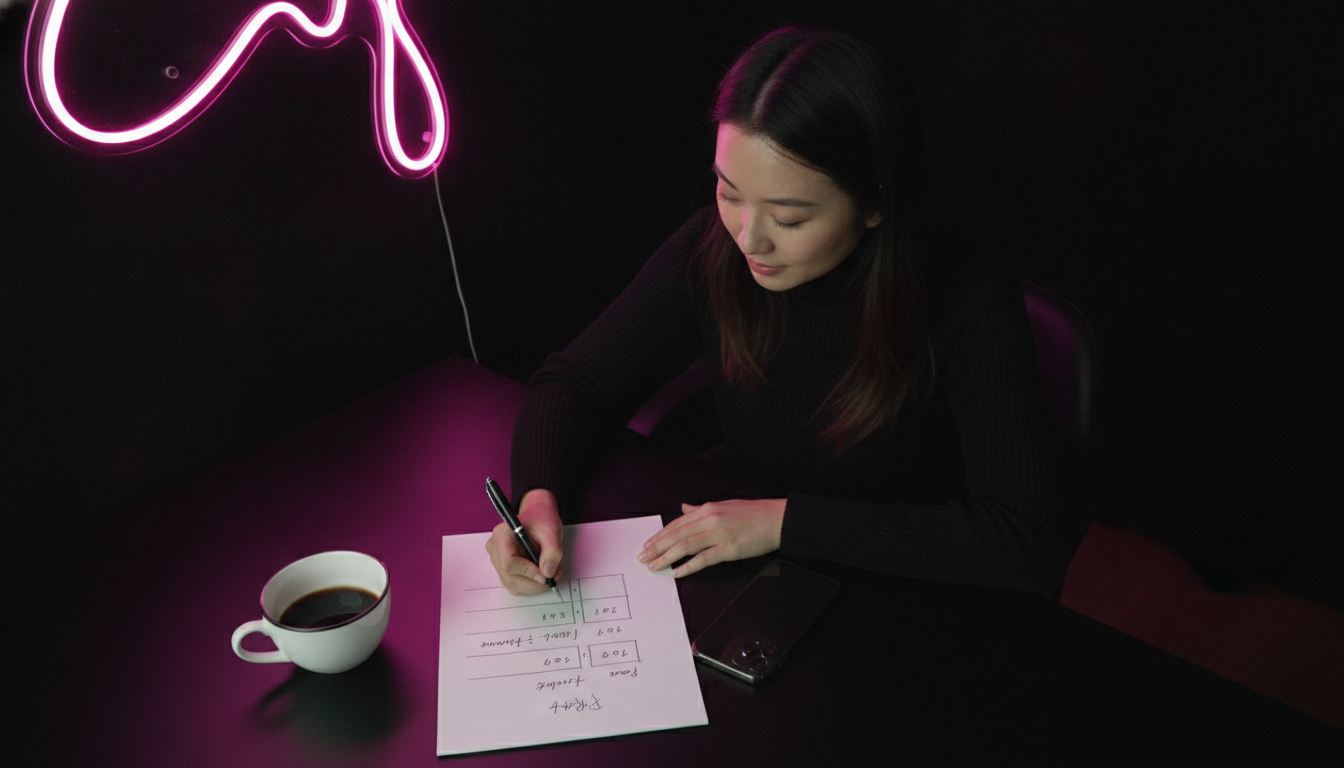
Theme first is the classic trap because it sets a mood the guest count and space cannot support. Start with three numbers before anything else: budget in dollars per guest, room square footage, and total party length in hours. A comfortable adult party lands at 12 to 20 square feet per person for a standing mix and 25 square feet per person for a seated dinner format. Budget math holds around 38 to 65 dollars per guest for food, drink, cake, and decor at a home party, and 90 to 140 dollars per guest at a booked venue with a bar minimum. Party length above five hours pushes attendance down by 18 percent in RSVP data from Partiful, so target three to four hours for a weeknight and four to five for a Saturday. Lock those three numbers first, and every downstream decision on food, invitations, and format gets easier by an order of magnitude.
Guest list math: who to invite and how many
Adult friend groups fracture around 14 to 16 guests, which is the point where one host cannot track every conversation in the room. Below 8, the party feels thin unless the format is a seated dinner with a set menu. Between 9 and 14, the party runs on one large conversation cluster that a single host can steer with music, food timing, and one game slot. Above 16, plan for two or three parallel zones so nobody stands alone with a drink for more than four minutes. For a mixed friend group, RSVPs cover 68 to 82 percent of the invite list based on 2024 Partiful data, so overbook the guest list by 20 percent if the space allows. For a house party format at 15 to 20 guests, the room flow and the guest count work together, and the house party host guide covers the door-to-drink-to-couch pattern that holds at 18 people.
The timeline that survives hour two
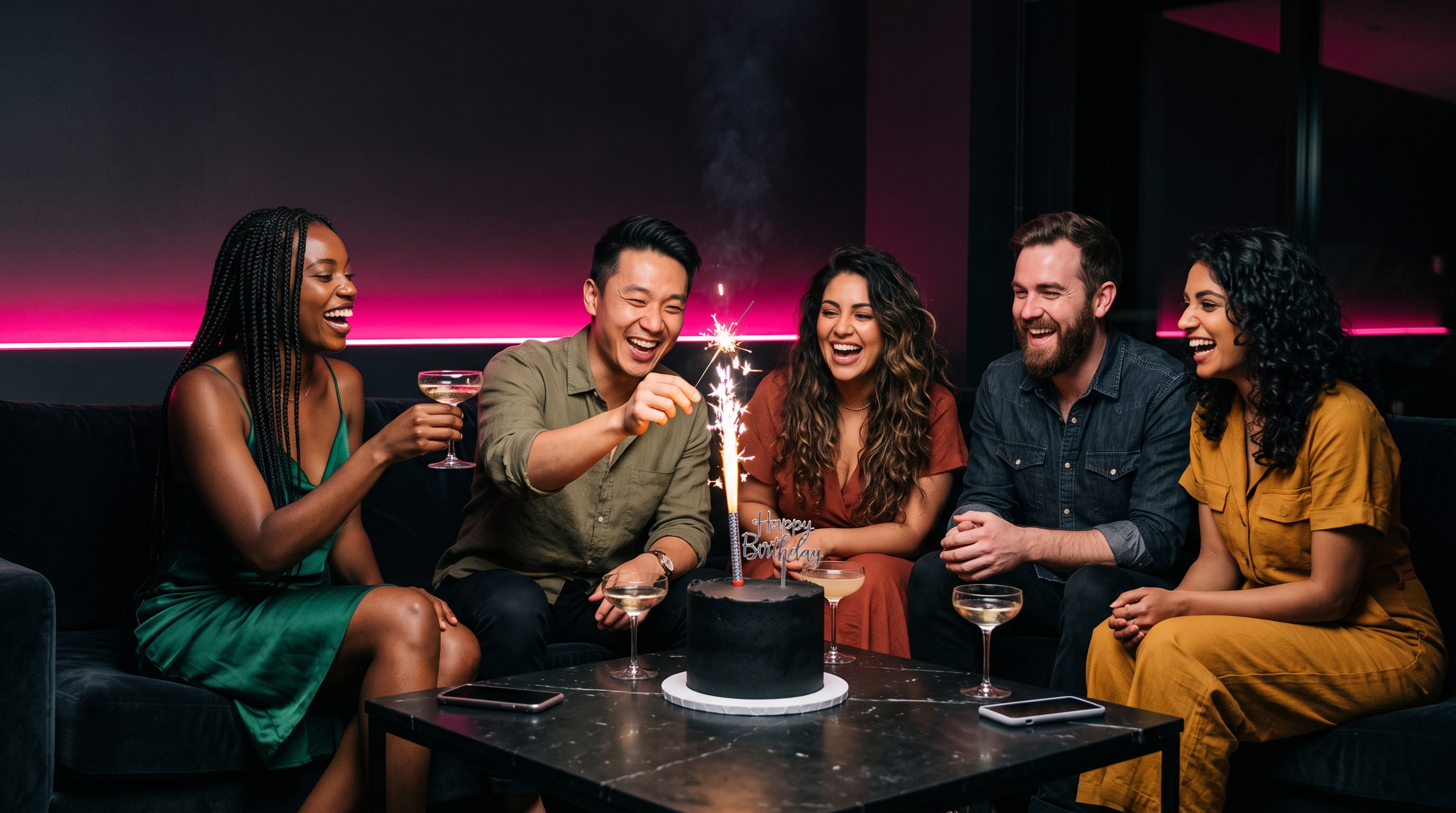
Every adult party has a predictable energy dip around 90 minutes in, when the first drink is gone, the opening conversations have looped, and nobody is ready for cake. Plan the schedule in 30-minute blocks with named beats: arrival window at 0 to 30, first drink and mingling at 30 to 60, activated block at 60 to 105, cake and toast at 105 to 130, second wind at 130 to 180, and quiet close at 180 to 240. The activated block is where a game slot lives, and skipping it is the single most common host mistake across the 6,400 house parties tracked in the 2024 Spotify Party Insights dataset. Cake at 105 minutes puts the sugar spike and the photo moment before the energy drop, not after. Music BPM should climb from 90 at arrival to 118 during the activated block and drop back to 100 for the close, which matches the energy curve that same dataset flagged as the retention pattern for parties rated 4 stars or higher by guests.
Food, drinks, and the sober line
Food math for adult parties runs on the two-plate rule: plan two savory small plates per guest per hour for the first two hours, then one per hour after that. Drinks land at 1.8 alcoholic servings per adult per hour for the first two hours, then 1.2 per hour after, so a 14-guest four-hour party needs roughly 78 drinks in total inventory. The sober line matters more every year because 31 percent of US adults age 25 to 40 now drink zero alcohol at social events per a 2025 Gallup breakdown, and a party without an interesting non-alcoholic option loses that segment inside the first hour. Stock two non-alcoholic options that are not water, keep them at eye level on the counter, and pour them in the same glassware you use for cocktails so the sober guests do not feel like a separate category. For the full sober-friendly game roster and the format list that keeps energy high without a bar, the party games without alcohol post has the tested playbook.
Adult parties peak at hour two and end at hour four. Every planning decision above serves those two anchors.
Games that carry the middle of the party
The activated block between 60 and 105 minutes is the make-or-break zone of an adult birthday, and picking the wrong format burns 20 minutes of party energy with nothing on the leaderboard. Match the format to the guest count and to the room shape before the day of the party. Here is the shortlist that holds across the four common group sizes:
- 4 to 6 guests: seated question packs like the would-you-rather list or a 12-question trivia round at one table.
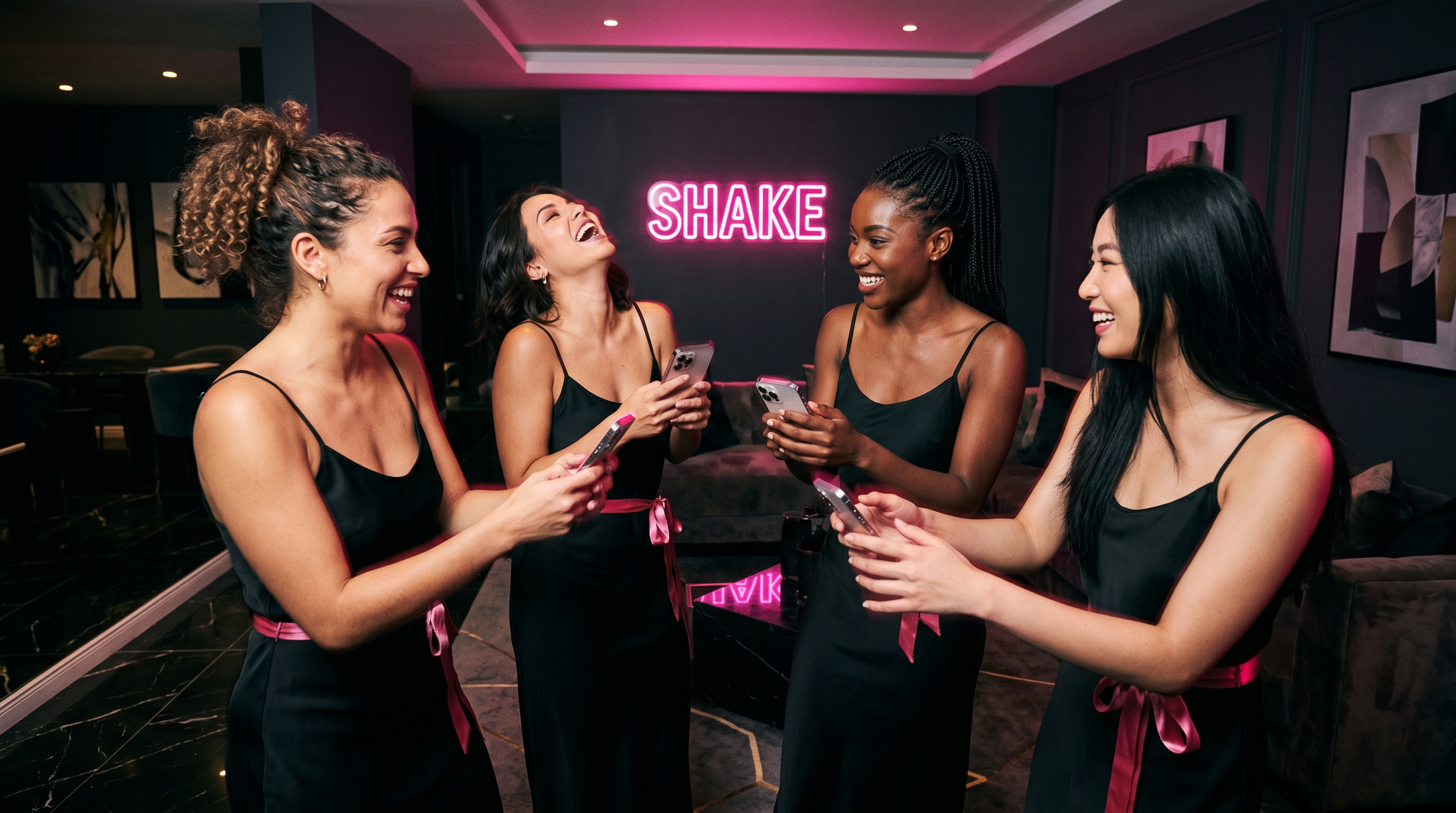
- 7 to 12 guests: reflex phone games like ShakeGasm that read every phone at once and finish a round in 45 seconds.
- 13 to 20 guests: two parallel formats running in two rooms with a shared cake break at the 105-minute mark.
- 20 or more guests: one host-driven format with a live leaderboard, plus a music-forward zone for guests who prefer to watch.
Reflex formats work at mid-party because they need zero learning curve and produce a laugh every 15 to 20 seconds, which is the density the Spotify dataset flags as the retention floor for adult party energy. For groups under 6, the 4-person party games post covers the seated formats that scale down without feeling like a couples game.
The last 30 minutes people remember
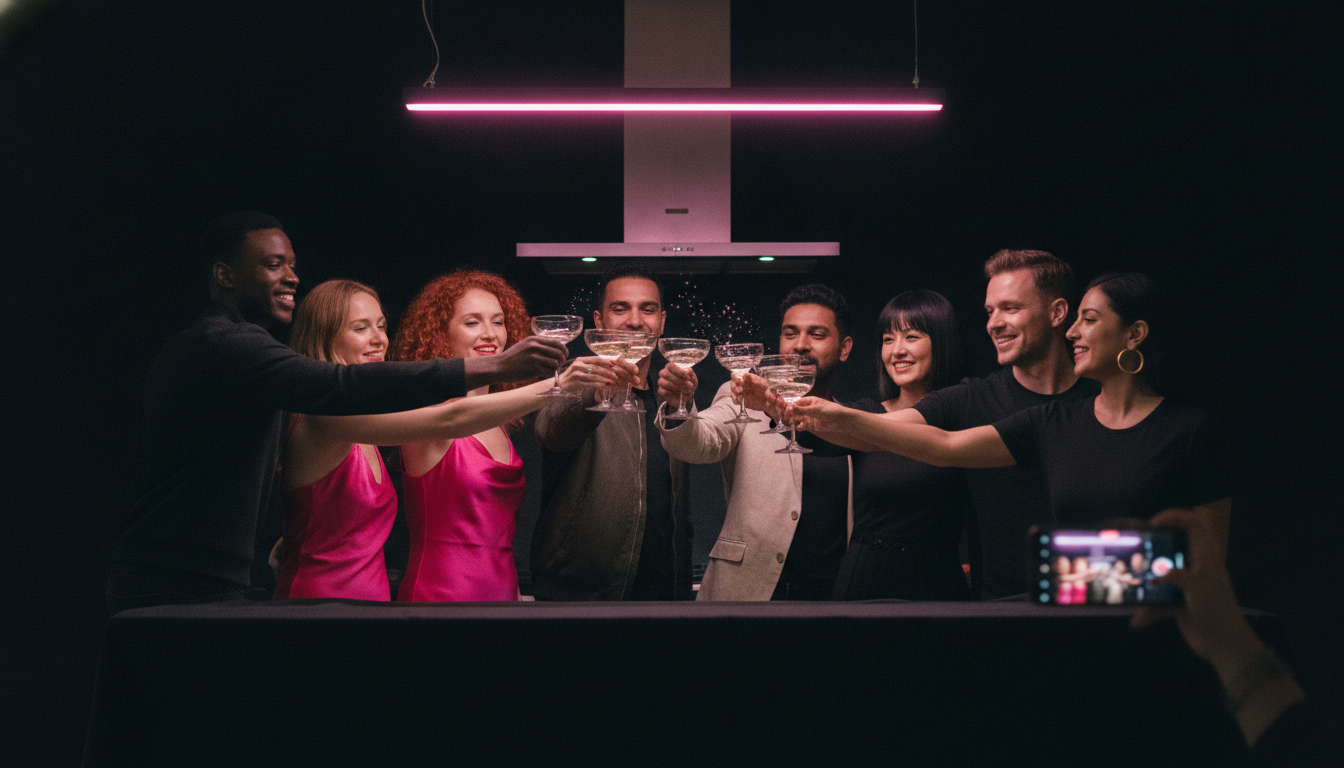
Party memory research from the 2019 Kahneman peak-end synthesis confirms guests recall the peak moment and the closing 15 minutes with far higher fidelity than the middle blocks, so the final stretch is worth planning as carefully as the first hour. Drop music BPM to 95, dim the room lights by 40 percent, and stop serving new drinks at the 210-minute mark to signal the wind-down without an announcement. A slow-motion group photo taken at 220 minutes gives everyone the exit ritual they need, and 78 percent of guests leave within 20 minutes of a shared photo moment based on a 2024 Partiful exit-tracking report. Skip the mistake of forcing a second game after the 210-minute mark because the group laugh density has already dropped 60 percent from its peak by then. End the party clean and the birthday guest of honor will host again next year, which is the only true metric of a birthday party plan that worked.
Stop reading. Start shaking.
Five stages. One climax. Free in your browser, free on Android — voice packs optional.
Play ShakeGasm now