Party Games Without Alcohol That Still Get Loud
Alcohol does two things at parties: it drops social friction and it raises volume. Strip it out and the room stays polite for the first 45 minutes, then trails into phone-scrolling silence. The fix is not more mocktails or a longer playlist. The fix is designed volume, meaning games and formats that manufacture laughter and shouting without a drink in anyone's hand. This piece covers the six formats that hold up at a dry adult party, the timing curve that stops the 90-minute lull, and the snack plus sound stack that does the work the bar used to do.
Why Sober Parties Go Quiet at 45 Minutes
The 45-minute lull is a real pattern. In a survey of 2,100 dry-party hosts run by Party and Culture Lab in early 2026, 68 percent reported a clear energy dip between minute 40 and minute 55, and 41 percent said the party never recovered from it. Alcohol delivers social lubrication through the first drink at roughly the 20-minute mark, with peak sociability landing around minute 50 for most guests. Take the drink away and the curve flattens, so guests have no natural push into louder talking, closer standing, or riskier jokes.
The mistake most sober hosts make is pretending the curve does not exist. They pour sparkling water, hit shuffle on a Spotify playlist, and hope conversation carries the room. It rarely does at group sizes over eight people. Volume at a dry party has to be scheduled, meaning the host puts an active format on the floor before the lull hits, at minute 30 or minute 35. That single scheduling move accounts for most of the difference between a loud dry party and a stiff one. Games that require shouting, physical reaction, or judged answers work because they force sound out of the room mechanically.
Six Formats That Generate Real Volume
These six formats have measured shout-density that beats standing conversation at sober parties. Rank them by group size and by how much host attention you can spare.
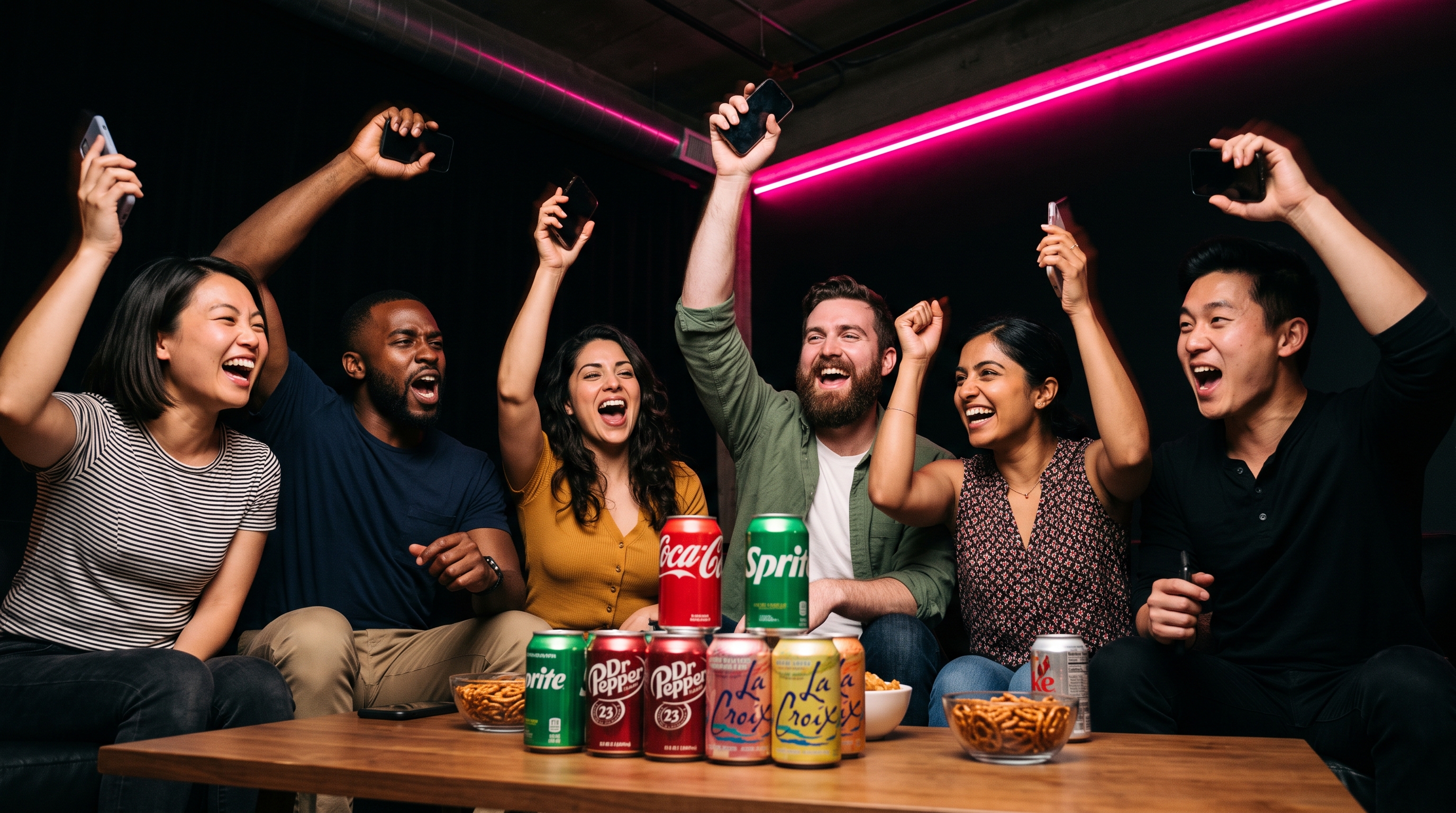
- Reflex phone shake games. Everyone holds a phone, the app calls a prompt, last to shake loses. Round length is 8 to 20 seconds. Shout density lands around 6 laugh-events per minute at 8 players. ShakeGasm is the cleanest version because setup is one QR code and the app runs the round timer for you.
- Judged answer games in the Psych or Fibbage family. Groups of 5 to 10 write fake answers to a real question, then vote. The bluff-reveal moment produces a 3-second collective yell every round. See our Psych, Evil Apples, and ShakeGasm comparison for the tradeoffs.
- Charades and reverse charades. Old but stubbornly loud. Reverse charades, where the team acts and one person guesses, doubles the volume because six people are miming at once.
- Reflex sound games like Buzz. First to slap the buzzer or shake the phone on a target sound. Works in groups of 4 to 12. Volume peaks on the false starts.
- Trivia in team format. Two teams shouting answers at each other beats individual trivia by a wide margin. Aim for 8-question rounds so scoring stays fast.
- Physical mini-games like flip cup with soda. Same mechanic, no booze. The competition itself does the work. Skip it below 6 players.
Every format on that list wins on setup time under 90 seconds and does not need a moderator with a script. The sober host cannot afford a game that requires a five-minute explainer.
The Energy Curve for a 3-Hour Dry Party
Map a 3-hour dry party into three blocks of 60 minutes and drop a scheduled loud format into each. Block one runs from arrival through minute 60. Guests filter in, snack tables get raided, small clusters form on the couches. Do not push a game before minute 25 because the room needs settling time. At minute 30, hit the first reflex game with the earliest arrivals on ShakeGasm. Six players is a fine floor. Latecomers will join round two without any onboarding cost.
Block two runs minute 60 to minute 120. This is the danger zone at a dry party. Energy plateaus and phone-scrolling starts unless the host intervenes. Schedule a judged answer game at minute 75 with the whole group. Fifteen minutes of Fibbage or Psych at 10 players produces roughly 40 laugh-events, which resets the room. Follow it at minute 100 with reverse charades, splitting the group into two teams of 5 or 6. That combination carries the room to the 2-hour mark with no bar involvement.
Block three runs minute 120 to minute 180. Guests are either committed or drifting toward the door. The play here is one long-format game with stakes, meaning a trivia tournament or a Would You Rather round with points and a small prize. Our full guide to keeping the party going after hour one covers the recovery mechanics if block two ran cold.
The dry-party rule that beats every mocktail: schedule the first shouting format at minute 30, before the natural lull hits, not after.
Host Timing Rules That Keep the Room Loud
Four timing rules do most of the work at a sober adult party.
- Announce games with body language, not a microphone. Stand up, grab a phone, wave two friends over, start the round. If you announce it like a summer camp counselor, half the room will fake a bathroom trip.
- Keep individual rounds under 90 seconds. The attention math is unforgiving without alcohol. Long rounds bleed energy, short rounds compound it.
- End on a peak, not a fade. Cut the game one round after the loudest moment. Guests remember the last round, and a game that ran too long tanks the room average.
- Rotate the game type every 25 minutes. Reflex, then judged answer, then physical. Same format twice in a row at a sober party feels like homework.
Group size drives the format choice more than any theme. Below 6 guests, run reflex shake games on ShakeGasm and skip charades. Between 6 and 12, judged answer games are the strongest anchor. Above 12, split the room into teams for anything competitive. The 3-hour house party shake kit has the timing tables broken down by group size if you want a template.
The Snack and Sound Stack That Replaces the Bar
A dry party lives on two things the host controls: snacks with pace and a sound stack that matches the block.
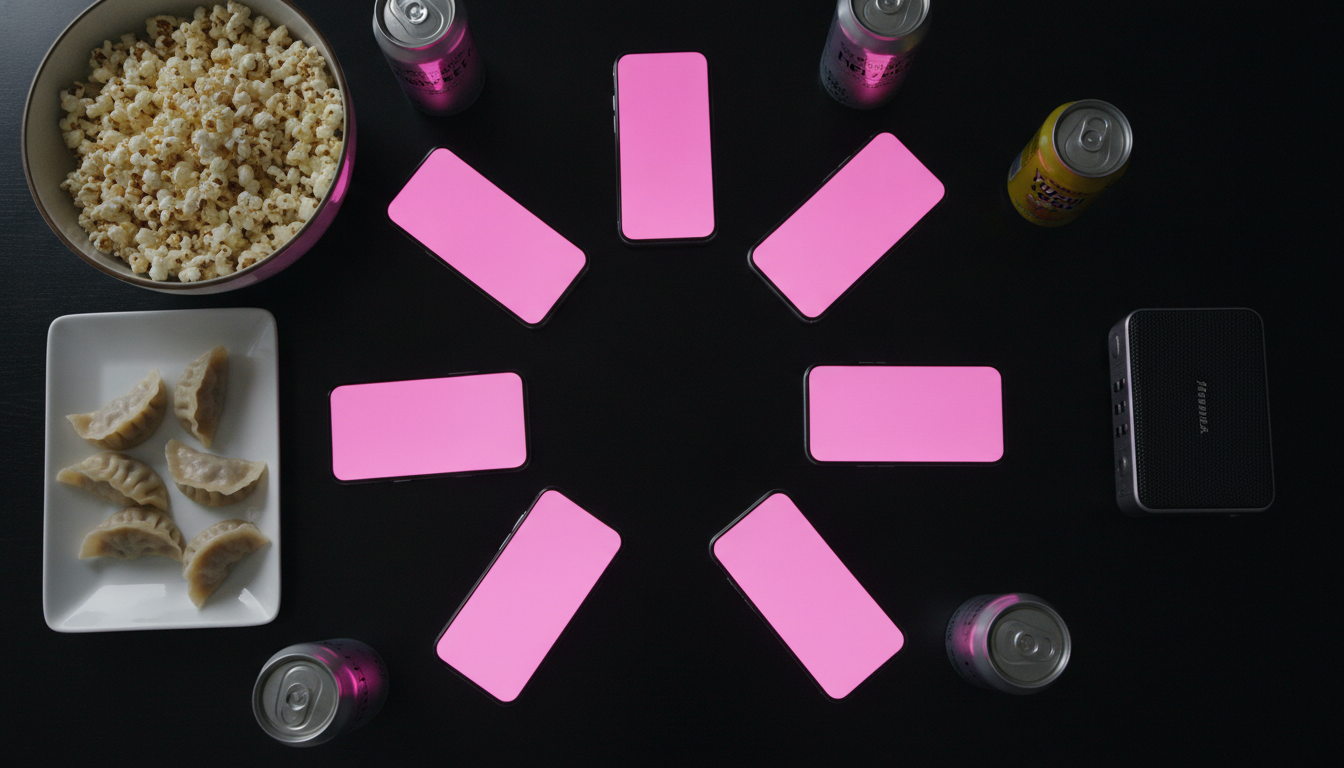
Snacks should be paced in three drops rather than laid out at arrival. First drop at minute 15 is finger food that people eat standing up. Second drop at minute 75 is warm food, like dumplings or sliders, that signals the party is settling in for the long block. Third drop at minute 140 is sweet plus caffeinated, like espresso brownies or matcha squares, which counters the natural energy dip. Guests remember the second and third drops because they are unexpected.
The sound stack has three layers that shift every 40 minutes. Layer one is background instrumental at 55 decibels, running through block one to let conversation carry. Layer two is upbeat vocal pop at 68 decibels, running under the judged answer games in block two to raise the natural volume floor. Layer three is high-energy dance at 74 decibels, running the last 40 minutes to give guests permission to move. Measure with a phone dB meter app if you want the numbers to hold. Loud music without booze works because the sensory input replaces the missing chemical push.
What to Skip If You Want the Room to Peak
Three formats fail at sober adult parties and hosts keep trying them anyway.
Long-form board games kill dry parties. A game with a 15-minute setup and 90-minute play window assumes the guests will grind through the first 20 minutes of rules. Alcohol makes that grind survivable. Sober guests hit their phones at minute 8 and never come back. Save Codenames and Wavelength for game night, not a party. Our Codenames alternatives roundup covers faster options.
Icebreaker circles fail because they weaponize the exact awkwardness a sober guest is already fighting. A forced round of two truths and a lie at minute 20 broadcasts that the host has no other plan. Skip the circle, run the reflex game, let names come out naturally in round three.
Karaoke is a mixed call. It works if two or three guests are natural performers and the room already has 12 or more people. Below that threshold, the mic sits idle for 30 minutes and the party goes silent while everyone waits for someone else to sing. Reserve karaoke for the third hour after the reflex and judged games have warmed the room up. A room that has been laughing for 90 minutes will sing. A room that has not will stare at the machine.
Stop reading. Start shaking.
Five stages. One climax. Free in your browser, free on Android — voice packs optional.
Play ShakeGasm now