Phone Games for Long-Distance Couples 2026: 25 Spicy Picks
Long-distance relationships die on a Tuesday. Not on the big weekend FaceTime, not on the airport goodbye, but on the Tuesday where neither person has anything to say and the call runs twenty-two minutes of silent scroll. A phone game is the cheap fix that lands every time, and most couples never build a shortlist that works across a six-hour time gap. Twenty-five picks below, ranked from flirty warmup to filthy finisher, every one playable on two phones with nothing else in the room.
The target is simple. A game that opens in under forty seconds, runs a round in under four minutes, and leaves one of you owing the other something by the end of the call. Nothing with a tutorial that outlasts the first round. Nothing that needs account signup on both sides. The spicy picks sit in their own tier because they do not play well on a jet-lagged call where one of you is still at a desk at lunch.
For the version where both of you share the same couch, our full couples night-in guide covers the physical setup for a Friday at home. This list is the other case: one person in bed at 2:14 a.m., the other killing forty minutes at a cafe seven time zones away, both of you with a phone and a window that closes the moment somebody falls asleep on camera.

Why long-distance phone game night runs on different rules
A long-distance game night fights three constraints a same-couch night ignores. Audio latency sits around 180 to 320 milliseconds on a standard video call, which kills any reflex game that needs same-screen sync. Battery drain hits twice as hard because at least one of you is running video on top of the game, and most phones drop below forty percent within ninety minutes of that combo. Time-zone math caps your window at roughly forty-five minutes on a weeknight before someone starts losing words mid-sentence. The shortlist below gets built around those three limits.
The second rule is intimacy throughput. A spicy prompt reads soft across a dinner table and heavy at 1 a.m. on a FaceTime call where the other person is half-undressed and the lamp is off. Spicy games benefit from the distance because the screen flattens social cost by roughly half. Reflex games suffer from it because they want zero lag and lose meaning past 200 milliseconds. Pick the format to match the hour on the clock.
The third rule is the second-open test. A long-distance couple opens the same app about six times a month before boredom sets in. The right game carries at least thirty hours of content or a mechanic that generates its own variation each round. Most truth-or-dare apps fail this test by the fourth session and go unopened by the sixth. The twenty-five below are weighted partly on how many openings they survive before the deck feels thin. For broader context across group play, our best phone party games of 2026 covers the same scoring logic for larger rooms.
25 phone games ranked from flirty to filthy
Numbered flirty to filthy. First twelve run clean on a Tuesday weeknight. Thirteen through twenty-five sit in the spicy tier for the nights where both of you have the door shut and the clock past midnight.
- ShakeGasm. Free in the browser at app.shakegasm.com, zero install, ten-second shake rounds. Each player runs the round on their own phone, lower score owes a dare from the agreed jar.
- Gottman Card Decks. Three tiers of relationship questions from the research lab everybody cites. Start on the first deck, cap at eight cards per call.
- Paired. Daily couple prompt plus a weekly mini-game, built for pairs apart more than together. The streak counter pulls both of you back once a day.
- Lasting. Therapy-adjacent prompts in five-minute sessions. Calmer tier, best for the night after an argument.
- Between. Private timeline for two with a daily photo exchange. Not a game on paper, runs like one by week three.
- Lovenote. Write one note each, both reveal at the same moment. Highest retention per feature of anything on this list.
- iPassion. Couples quiz with one hundred and twenty themed questions, one theme per call. Difficulty scales clean from first-date light to decade-in heavy.
- We Not Me. Relationship quiz, both answer privately, compare on reveal. Surfaces the gaps worth a longer conversation after the quiz ends.
- Heads Up Couples deck. Phone on forehead, clue over the call, three-minute rounds. Audio latency hurts but one round still finishes under four minutes.
- Words With Friends. The old warhorse, one tile per hour if needed, carries a single game across a fifteen-hour time gap.
- Draw Something. One drawing per turn, the other guesses on their schedule. Best of the async-queue picks for couples with mismatched windows.
- Agent A: A Puzzle in Disguise. Co-op escape puzzle traded across chapters via screenshot. Runs about six hours total at one session a week.
- Kindu. Card deck of five hundred intimacy ideas, both check cards privately, only mutual matches reveal. The queue mechanic works beautifully across time zones.
- Desire. Similar engine to Kindu with heavier spicy weighting and a weekly challenge system. Pick one couple challenge per Sunday.
- Monogamy card-game clone. Three tiers of intimacy prompts with the third tier gated to both-ready sessions. Best used sparingly, two cards per call.
- Couple Game. Spicy truth-or-dare pack built for pairs, four difficulty tiers, fourth tier explicit. Rotate the deck monthly so prompts stay fresh.
- Truth or Dare: Dirty. App-store spicy standard, deck of about three hundred prompts. Strong warmup before any of the picks from number twenty onward.
- Dare & Do Spicy. Dare generator with a built-in stopwatch, two-way camera-share makes the enforcement real.
- Sex Roulette. Position wheel with a sixty-second countdown. Single-phone mode for anticipation, two-phone sync for simultaneous attempts on your own end.
- iKinkster. Fetish inventory and matching engine. Both fill the inventory in week one, compare the overlap in week two.
- Mojo. Guided intimacy coach with voice-led sessions, built for solo use that pairs naturally over a late call.
- OMGYes paired use. Technique library, watch together on the same prompt and copy. Priced at thirty-nine dollars a year, the only paid pick worth logging twice.
- Spyfall two-player. Online lobby, each picks two roles, bluff over the call. Different muscle than honesty cards and runs a round in seven minutes.
- Keep Talking and Nobody Explodes. Bomb-defusal co-op, one person on the phone, the other on the manual PDF. Twelve-minute rounds scale across any time zone.
- Psych! Fake-answer trivia that holds at two players if both commit to the bluff. Under four minutes a round, free on both app stores.
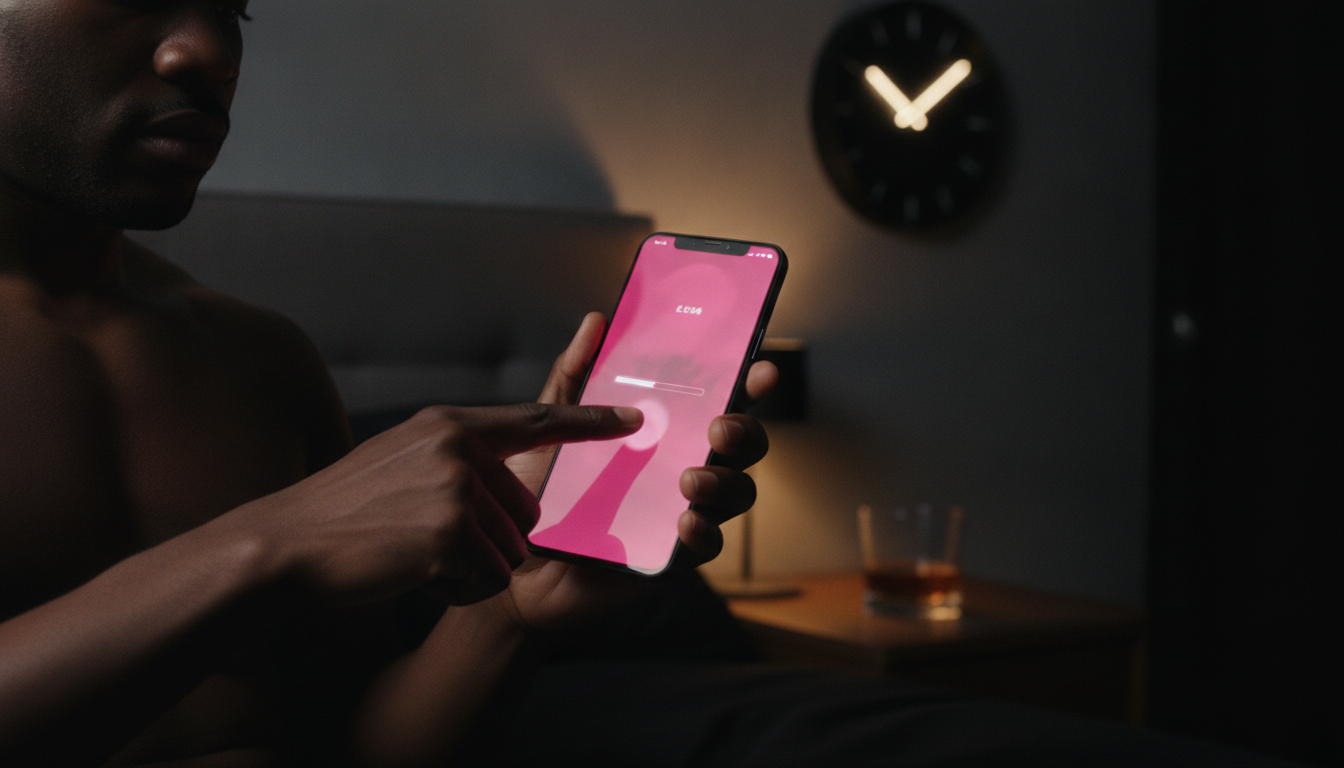
The spicy shortlist: 7 games worth the second open
Twenty-five picks is a menu. Seven of them survive the long-distance second-open test harder than the rest, and three of those seven belong in every long-distance couple rotation. Rotation matters because the same prompt hit twice inside a month loses roughly forty percent of its charge. Build the seven below into a Sunday loop and the deck stays fresh for six to eight months.
The spicy work travels differently from the rest. Phone reflex games feel good partly because the body is involved, and the same principle applies when the game asks for a specific physical move at a specific moment. A dare completed on camera at 1:30 a.m. carries weight a written prompt cannot match. The seven picks below do that work hardest, and ShakeGasm sits in position four for the adrenaline bump.
- Kindu. Queue-based mutual matching. The anticipation between check and reveal is half the game.
- Desire. Weekly couple challenge. Solves the planning problem for pairs who cannot schedule intimacy in advance.
- Couple Game spicy tier. Fourth-tier deck only, no lower cards on the spicy night. Twenty prompts per session caps it clean.
- ShakeGasm with jar stakes. Lower score strips, writes, or performs one dare from the agreed jar. The physical shake supplies adrenaline the slower games lack.
- OMGYes paired. Technique content watched at the same minute, then copied on camera. Teaches more in forty minutes than a year of guessing.
- Mojo guided. Voice-led session played together, each person on their own phone. Best pick for the night when one of you is tired and wants structure.
- Monogamy third tier. Two cards only. The sealed-envelope mechanic turns a prompt into an event.
How to run a long-distance game night without lag ruining it
The game is half the night. The other half is the call setup, the window, the stakes, and whether somebody is off the clock. Most long-distance couples skip three of the five rules below and then wonder why game nights fizzle out by the second month.
Pick a window that respects the worse time zone first. Forty-five minutes of overlap at a reasonable hour on both ends is the floor. If one of you sits at 11 p.m. and the other at 6 a.m., the game night does not happen that week, and pushing it anyway kills the habit by the third attempt. Lock the call to audio-only for any reflex-heavy game. Video adds 80 to 150 milliseconds of lag per side and drops phone battery twenty percent faster across a forty-minute session.
Agree on the deck and the stakes in a text thread before the call opens, not during it. Negotiating mid-call kills the first fifteen minutes of your window and shifts the mood from play to admin. Phones on do-not-disturb for both of you, not silent mode, because notifications poke through silent and break the rhythm every single round. Cap the session at forty minutes with a hard stop on the clock. Ending on a win beats ending on a yawn by a margin neither of you can measure but both of you feel on the next call.
The right long-distance phone game costs nothing, runs in forty minutes, and leaves a stake owed by sunrise. Everything longer is a timer with extra steps.
Stakes that cross time zones
A game without stakes is a timer with extra steps. Stakes for long-distance couples have to be redeemable on the other end of the wire, and that rules out half the stakes a same-room couple can use. The five below work remote, cost nothing, and compound across months.
- Loser sends one voice note by the next morning, two minutes minimum, on a topic the winner picks on the call.
- Loser pays for the next delivery meal on the winner's side, whichever app the winner uses, under twenty-five dollars.
- Loser writes a three-sentence dirty-talk message by noon the winner's time, zero edits allowed on the send.
- Loser strips one item on camera per round lost, with a hard floor both of you agreed on before the first round. Camera on, lights down, no exceptions.
- Loser owes one scheduled video date within seven days at a time the winner picks, dress code set by the winner.
The compounding move is the shared dare jar built in a shared notes app. Ten prompts from each person, filed on day one, drawn blind on the loss. Six months in, a long-distance couple running the jar has a two-hundred-prompt library and a weekly date that costs nothing. The gear matters less than the loop. Three picks, forty minutes, one stake that lands by the next sunrise, run the loop every week.
Stop reading. Start shaking.
Five stages. One climax. Free in your browser, free on Android — voice packs optional.
Play ShakeGasm now