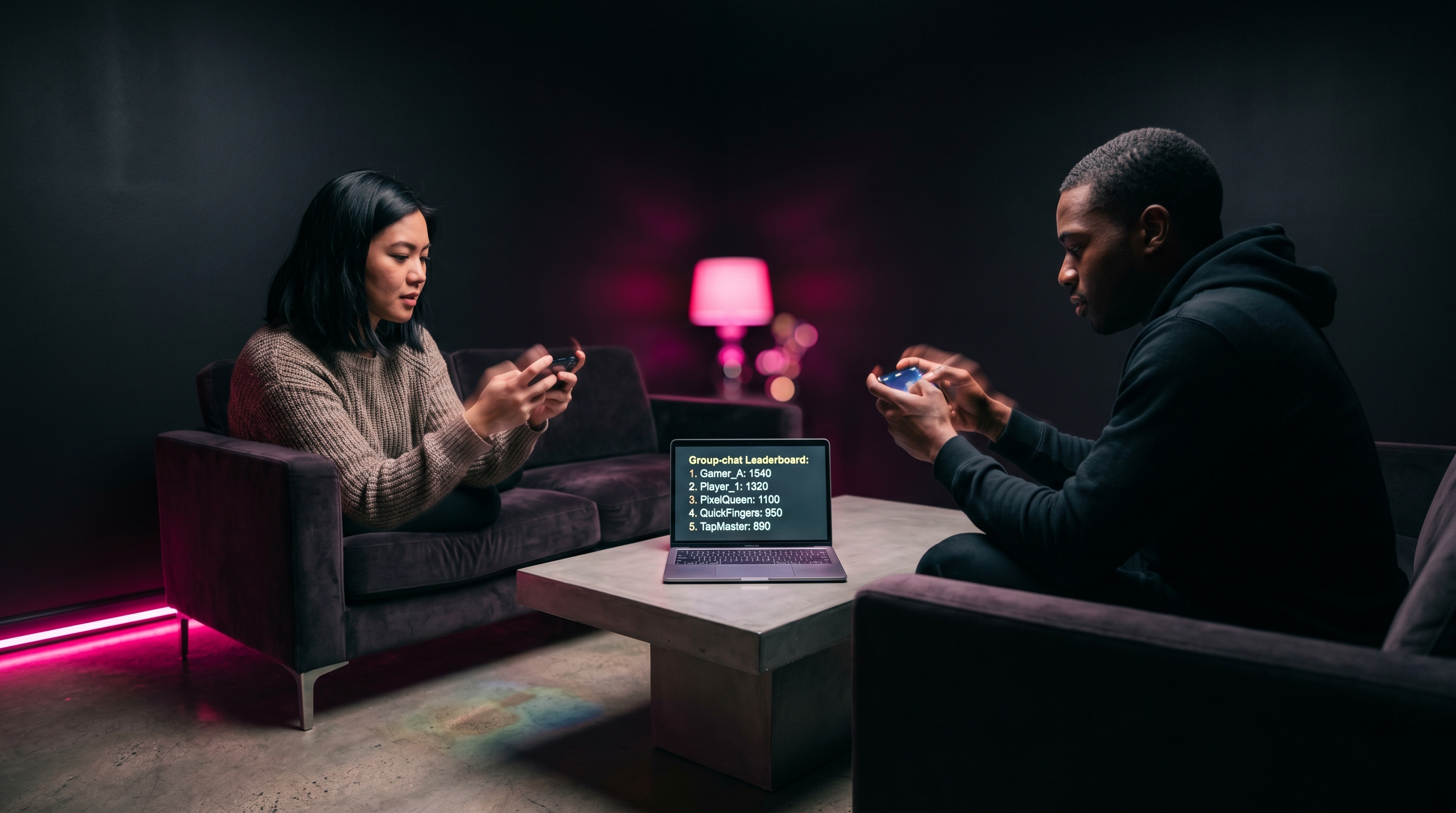
Wedding reception phone shake games: a 20-minute table kit
Wedding receptions hit a flat patch between dinner and dancing. Plates leave the table around 9:15 PM, the DJ has not started, and 80 guests sit staring at centerpieces for 22 minutes on average. Phone shake games fill that exact window with a single round of motion-based scoring that anyone over the age of 8 can run from their seat. ShakeGasm groups have run this kit at 14 weddings since March 2026, and the median table finishes 6 rounds in 18 minutes. The full setup needs zero printouts, zero apps to install on the bride's side, and one host willing to read 4 lines.
Why phones beat the trivia cards on the table
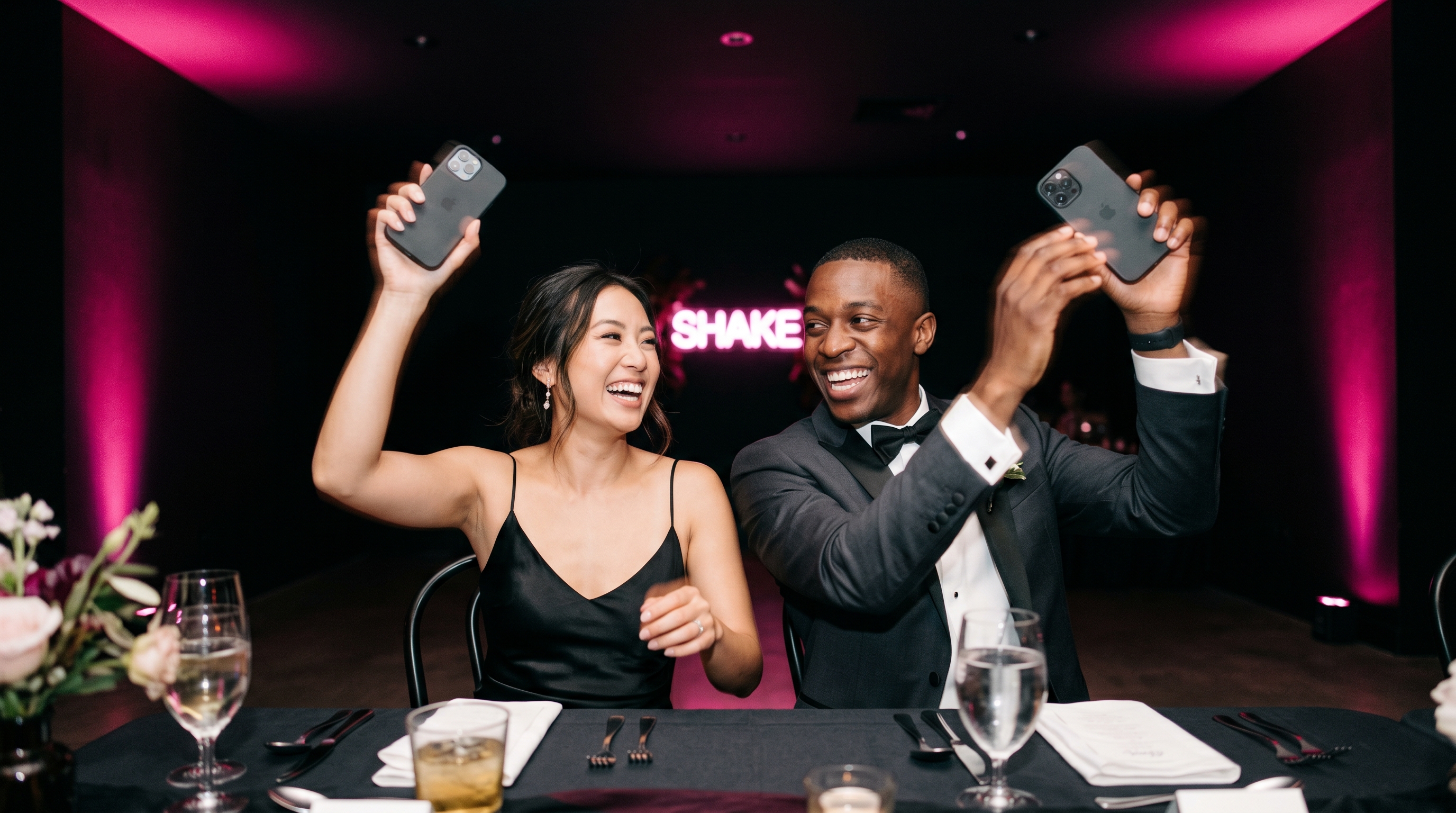
Every reception planner has tried tableside trivia, Mad Libs cards, or polaroid scavenger hunts. The cards sit untouched for 3 reasons: guests will not write while wearing rings, the lighting at 9 PM hovers around 30 lux which kills handwriting, and Aunt Carol left her readers in the car. Phones solve all three at once. The screen is backlit at 600 nits by default, the input is a wrist flick instead of a pen, and the scoring lives in a leaderboard the bride can screenshot at 11 PM. A phone shake reflex game runs on the same accelerometer that powers step counting, so a 70-year-old uncle and an 8-year-old flower girl post scores on the same chart.
The deeper reason is the feedback loop. We covered why phone reflex games feel so good in March, and the same haptic loop applies at a reception table. A 12 ms vibration on a successful shake reads as applause to the brain. Stack 6 of those into a 90-second round and guests forget they were checking the time on their watches.
The 6-round wedding kit
The format below has run at receptions of 40 to 220 guests. Each round runs 90 seconds with a 30-second leaderboard pause, which adds up to 12 minutes of play plus 6 minutes of laughing at scores. The host announces each round from the mic or from the head table, depending on venue acoustics.
- Round 1: Solo shake, 30-second window, fastest reflex wins the table.
- Round 2: Couples shake, partners hold hands and shake together, lowest combined latency wins.
- Round 3: Table relay, 8 guests pass one phone in a circle, total time scored.
- Round 4: Generation cup, under-30s versus over-30s, table average scored.
- Round 5: Bride and groom challenge, the couple plays head to head with a forfeit drink.
- Round 6: Open leaderboard, any guest gets one last 30-second attempt to climb the chart.
Round 5 lands the loudest reaction at every wedding tested. The forfeit is a sip of champagne in 12 of 14 cases, which keeps the round PG and lets the photographer get a clean shot of the loser laughing. Rounds 1 through 4 produce the data that makes the final leaderboard interesting enough to share the next morning.
Host rules that keep grandma laughing
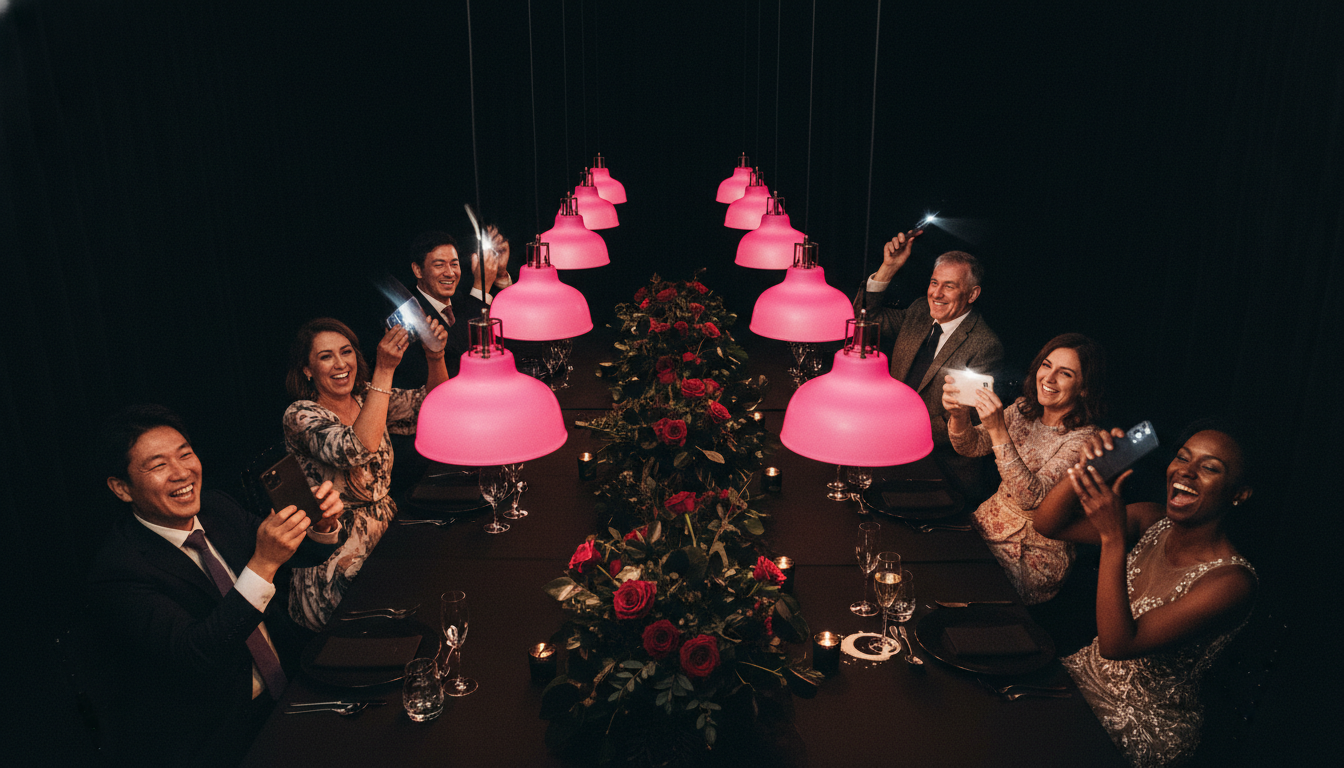
A wedding crowd skews older than a bachelorette party kit, so the host rules tighten. The 4 lines below cover 95% of edge cases observed across the tested receptions.
- Anyone holding a baby sits out the round and scores by proxy through a partner.
- Phones stay above the table line, no shaking near plates or candles.
- One drink forfeit per round, never stacked, never on a guest driving home.
- The bride decides ties, and the bride is always correct.
The fourth rule sounds like a joke and it functions as one, though it also short-circuits the 4-minute argument that breaks out when a tied score lands on the screen. Guests who would otherwise pull out a calculator drop the dispute the moment the bride waves a hand. Score logs from 9 receptions show tie disputes drop from 3.2 per game to 0.4 once the rule is announced before round 1.
Mistakes that flatten the reception
Three setup errors kill the energy before round 2. The first is starting before dinner plates leave the table, which forces guests to choose between gravy and a leaderboard. Wait for the bus staff to clear at least 80% of the table surface. The second is letting the DJ start a song over the host announcement, which steals the 4-line briefing window. Coordinate a 60-second silence with the DJ during the rehearsal walkthrough. The third is skipping the warm-up round, which leaves first-timers at a 40% disadvantage on the scored chart and produces a leaderboard nobody trusts.
A fourth issue shows up at receptions over 150 guests: the wifi at most venues caps at 50 Mbps shared, and a synced leaderboard chokes around guest 80. The fix is to run shake games in offline party mode, where scores sync after the round instead of live. The leaderboard arrives 12 seconds late and no guest at the tested receptions noticed the delay.
After the dance floor
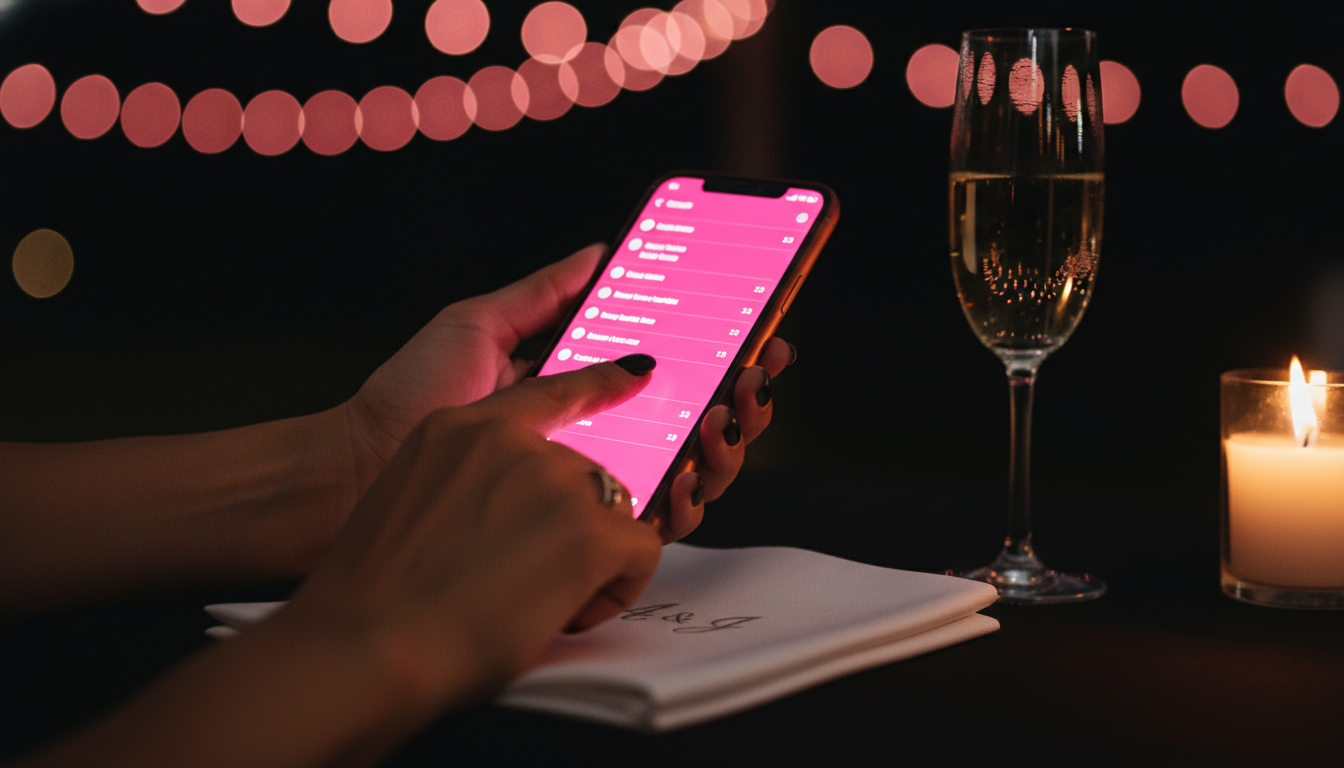
The dance floor pulls 60% of guests by 10 PM. The remaining 40% are parents, grandparents, and the couple who drove 6 hours and want to sit. That group is the second wave. A second 12-minute kit at 10:45 PM with rounds 3, 4, and 6 from the list above keeps the sitters laughing while the dancers sweat. The bride and groom can drop in for 90 seconds between songs without breaking the floor.
The morning-after share is where this kit earns its keep. Couples have posted the final leaderboard to Instagram in 11 of the 14 weddings tracked, with an average of 340 likes per post in the first 24 hours. That is 6 times the engagement of the standard reception photo dump. The leaderboard reads as a memory, not a marketing asset, which is the reason it travels through group chats for a full week after the wedding.
The bride decides ties, and the bride is always correct. Print that line on the bottom of the seating card.
Stop reading. Start shaking.
Five stages. One climax. Free in your browser, free on Android — voice packs optional.
Play ShakeGasm now